
There is nothing quite as exhilarating as a business that is scaling rapidly. When the sales pipeline is overflowing, the customer reviews are glowing, and revenue targets are consistently shattered, it is easy to feel invincible. You have found product-market fit, and the momentum is carrying you forward. However, hyper-growth is a double-edged sword. While the front end of your business is sprinting ahead, the back-end operations are often left gasping for air, struggling to keep up with the sudden demand.
This disconnect creates operational blind spots. When leaders are hyper-focused on customer acquisition and top-line revenue, they naturally spend less time looking at infrastructure, security, compliance, and logistics. These blind spots might seem like minor inconveniences at first—a delayed shipment here, a cluttered stockroom there—but as your company scales, these tiny cracks can widen into massive, costly sinkholes.
Sustainable growth requires a foundation that can bear the weight of your success. If you are currently experiencing rapid expansion, you must periodically step back from the sales dashboard and audit your operational infrastructure. Here are ten critical operational areas that growing businesses frequently overlook, and how you can proactively address them before they stunt your upward trajectory.
Securing the Right Space for Heavy Operations
When a company first launches, operating out of a garage, a small retail space, or a cramped office is a badge of honor. It keeps overhead low and fosters a scrappy, collaborative culture. But as order volumes multiply and your team expands, that quaint space quickly transforms into a massive bottleneck. You start playing Tetris with inventory, employees are tripping over each other, and productivity plummets.
The blind spot here is waiting too long to upgrade your physical footprint, often because business owners underestimate the time it takes to find and outfit an appropriate commercial space. Moving from a light commercial office to a facility that can handle heavy manufacturing, large-scale assembly, or massive distribution requires a completely different real estate strategy.
You must account for zoning laws, power requirements, floor load capacities, and loading dock accessibility. When the time comes to finally sign a lease or purchase an industrial property, you need to ensure the facility not only accommodates your current output but has the physical capacity to handle your projected growth for the next three to five years. Failing to secure the right operational hub will throttle your output, no matter how much demand your sales team generates.
Managing Sudden Inventory Overflow
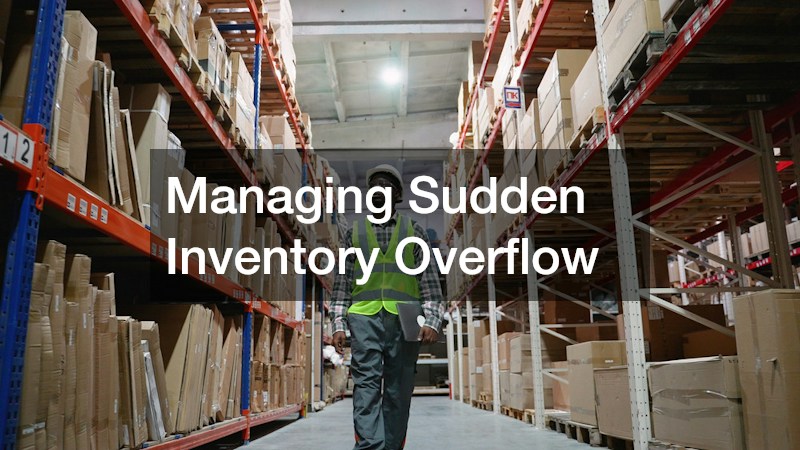
Growth rarely happens in a perfectly predictable, linear fashion. Sometimes, a viral marketing campaign or a massive B2B contract results in a sudden, overwhelming influx of orders. To meet this demand and avoid stockouts, you inevitably have to order larger quantities of raw materials or finished goods. Suddenly, your pristine warehouse looks like a chaotic labyrinth, and you are losing time and money simply trying to locate products.
Many businesses try to cram this excess inventory into their existing footprint, which leads to damaged goods, lost items, and severe safety hazards. The operational blind spot is failing to build elasticity into your inventory management strategy.
Instead of committing to a massive, expensive warehouse expansion before you are truly ready, you need flexible overflow solutions. Establishing a relationship with secure local storage facilities can provide the elastic space you need to house excess inventory during peak seasons or unexpected demand spikes. By utilizing off-site storage for bulk materials or non-essential seasonal items, you keep your primary operational floor clear, organized, and optimized for daily fulfillment, all while keeping overhead costs manageable.
Protecting Your Assets Around the Clock
As your business scales, your physical assets multiply. You accumulate more inventory, expensive specialized equipment, fleet vehicles, and high-end office technology. Unfortunately, as your visible success grows, so does your profile as a potential target for theft, vandalism, and liability claims.
The blind spot for many fast-growing entrepreneurs is relying on the same basic lock-and-key security protocols they used when the business was just an idea on a napkin. When you are moving thousands of dollars of goods daily and employing dozens of people, an alarm system that just rings a bell is woefully inadequate.
Upgrading your security infrastructure by installing a comprehensive, high-definition surveillance camera system is a critical operational safeguard. Modern systems offer cloud storage, remote mobile viewing, and even AI-driven alerts for unusual activity. This not only deters break-ins and minimizes shrinkage but also provides vital documentation in the event of workplace accidents or false liability claims, ultimately protecting your bottom line and lowering your insurance premiums.
Establishing Secure Physical Perimeters
Security does not begin at the front door of your building; it begins at the edge of your property line. As your operational footprint expands, especially if you are managing vehicle fleets, outdoor equipment, or exterior loading zones, the vulnerability of your exterior premises becomes a major operational concern.
A common blind spot is investing heavily in interior security while leaving parking lots, loading bays, and equipment storage yards completely exposed to the public. If unauthorized individuals can easily wander up to your delivery bays or access your company vehicles after hours, you are exposing your business to significant financial risk and operational disruption.
Creating a hard perimeter is the first line of defense. Reaching out to professional fence installation services ensures that your property boundaries are clearly defined and physically secure. Whether it is commercial-grade chain link for an equipment yard or an automated gate system to control access to your loading docks, a robust perimeter restricts unauthorized access, channels visitors to appropriate checkpoints, and secures your outdoor assets against opportunistic crime.

Scaling Your In-House Delivery Fleet
In the early stages of growth, relying on third-party logistics providers, courier services, or even employees’ personal vehicles for deliveries makes financial sense. It keeps capital expenditures low. However, as your local and regional order volume skyrockets, the cost of outsourcing your delivery and distribution can quickly erode your profit margins. Furthermore, relying entirely on third parties means you surrender control over the final customer experience.
The blind spot is failing to recognize the tipping point where outsourced logistics become a financial drain rather than a convenience. When delivery delays, damaged goods, and exorbitant shipping fees start impacting customer retention, it is time to take control of your supply chain.
Transitioning to an internal distribution model requires capital, but it pays dividends in reliability and brand control. By monitoring commercial box truck sales and strategically purchasing the right vehicles, you can build an in-house fleet tailored to your specific product dimensions and route requirements. Owning your fleet allows you to guarantee delivery times, train your own drivers to act as brand ambassadors, and dramatically reduce the per-unit cost of regional distribution.
Tapping into Regional Capital Providers
Growth consumes cash. It is a fundamental law of business. You need capital to hire new staff, purchase bulk inventory, expand facilities, and launch marketing campaigns long before the revenue from those investments actually hits your bank account. The most dangerous blind spot for a scaling company is assuming that profitability equals positive cash flow. Many profitable, fast-growing companies have gone bankrupt simply because they ran out of cash while waiting for invoices to be paid.
When the traditional bank lines of credit are exhausted, founders often panic or stall their growth. They assume the only alternative is traveling to Silicon Valley or Wall Street to pitch massive institutional venture capital firms, which often demands giving up significant equity and control.
However, growth capital can often be found much closer to home. Presenting your business plan and financials to local accredited investors can yield incredible results. Regional investors, family offices, and local syndicates often have a vested interest in the economic development of their own communities. They understand the local market dynamics, are often more flexible with their deal structures, and can provide invaluable regional networking connections alongside their financial injection.
Moving Beyond DIY Bookkeeping
When you first launch a business, managing the books on your laptop late at night is a necessary reality. You know every dollar coming in and every dollar going out. But as revenue climbs into the millions, payroll expands to dozens of employees, and tax obligations become increasingly complex across multiple jurisdictions, DIY accounting becomes a massive operational liability.
The blind spot here is viewing accounting merely as a tax-season necessity rather than a strategic operational tool. Fast-growing companies that rely on amateur bookkeeping frequently suffer from cash flow bottlenecks, misclassified expenses, and terrifyingly inaccurate financial forecasting. By the time they realize a product line is bleeding money, months have passed.
To scale safely, you need financial data that acts as a GPS, not just a rearview mirror. Retaining a professional accounting firm provides you with the sophisticated financial architecture required for growth. Experts will establish proper internal controls, manage complex payroll compliance, optimize your tax strategy, and—most importantly—provide the real-time financial reporting you need to make confident, data-driven decisions about the future of your company.
Accelerating Your Hiring Pipeline
You cannot scale a business on the backs of an exhausted founding team. Growth requires talent, and lots of it. Whether you need warehouse managers, senior software developers, or regional sales directors, recruiting is one of the most time-consuming operational challenges a growing business faces.
The blind spot for many scaling companies is treating recruitment as a part-time job for the CEO or the operations manager. Posting a job online and wading through hundreds of unqualified resumes drains hundreds of hours of productivity from your leadership team. Furthermore, rushed hiring processes often lead to poor cultural fits, resulting in high turnover that resets your progress and damages team morale.
Building a dedicated talent pipeline is essential. Partnering with specialized local employment firms allows you to offload the heavy lifting of recruitment. These agencies already have vetted pools of talent, understand the regional salary expectations, and can rapidly match you with candidates who fit both your technical requirements and your company culture. This drastically reduces your time-to-hire and allows your leadership team to remain focused on running the business, rather than reading resumes.
Making Your New HQ Unmissable
As your company grows and you move into larger, more prominent facilities, your physical location becomes a key part of your brand identity. It is no longer just a place to work; it is a statement to your clients, your competitors, and your community that you are an established, successful entity.
A surprising blind spot for many digital-first or rapidly expanding companies is neglecting their physical brand presence. You might have a beautifully designed website and millions of online impressions, but if your corporate headquarters or retail facility features a faded, temporary banner zip-tied to the front door, you are instantly undermining your credibility in the real world.
Your physical location should work for you as a 24/7 marketing asset. Collaborating with a professional custom sign company ensures that your building reflects the quality and scale of your operations. From illuminated exterior channel letters that capture highway traffic to sophisticated interior lobby signage that impresses visiting clients, professional signage solidifies your brand authority and creates a sense of permanence and pride for your growing team.
Upgrading Your Physical Marketing Assets
As your operational capabilities expand, your sales and marketing efforts must mature to match them. You will likely find yourself pitching larger enterprise clients, attending major industry trade shows, and outfitting your new vehicle fleet. The scrappy, low-budget marketing materials that worked when you were a startup will no longer cut it when you are competing against established industry titans.
The blind spot is showing up to major opportunities looking like a small-time player. If your sales team is handing out flimsy brochures, or your trade show booth consists of a wrinkled tablecloth and a standard pop-up banner, potential clients will subconsciously doubt your capacity to handle their large-scale accounts.
To project an image of capability and stability, you must invest in premium physical collateral. Leveraging high-resolution large format printing allows you to create marketing assets that command attention. Whether it is a flawless, full-color vehicle wrap for your new delivery trucks, massive, vibrant backdrops for industry expos, or crisp architectural graphics for your office walls, premium printed assets signal to the market that your company is substantial, professional, and ready for the big leagues.
Rapid growth is the ultimate goal of almost every business venture, but it is a stress test for every system, process, and physical asset you possess. When demand spikes, the cracks in your foundation will inevitably show. The companies that survive hyper-growth and transition into stable, dominant market leaders are the ones that proactively anticipate these operational blind spots.
By strategically upgrading your real estate, securing your assets, modernizing your logistics, and refining your professional image, you ensure that your operational infrastructure can not only support your current success but propel you toward the next level of your business journey. Keep your eyes on the sales dashboard, but never take your hands off the operational steering wheel.