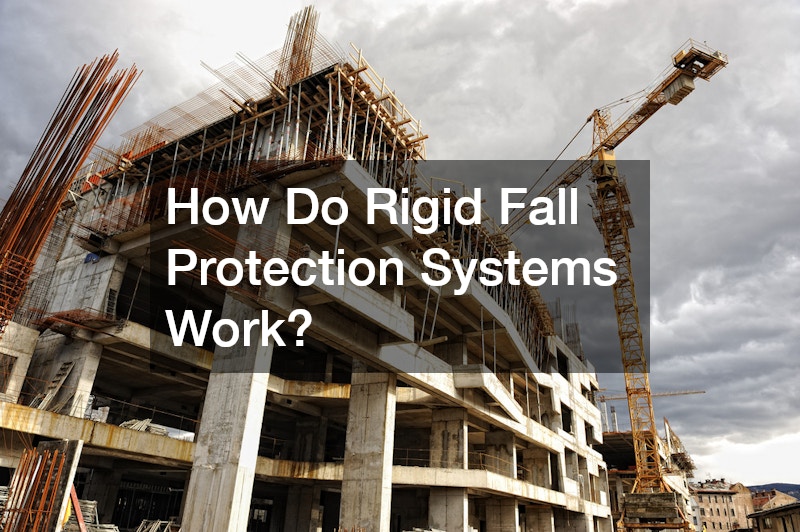
In work environments where elevated tasks are commonplace, ensuring the safety of workers is paramount. Fall protection systems play a crucial role in mitigating the risks associated with working at heights. Among these systems, rigid fall protection systems stand out for their robust design and effectiveness. By providing a solid and immovable track or rail, these systems ensure optimal safety and confidence for employees working at elevated levels.
This article dives into the mechanics behind rigid fall protection systems, understanding their components, functionality, and the crucial role they play in workplace safety.
Understanding the Basics of Rigid Fall Protection Systems
Rigid fall protection systems are an integral aspect of ensuring safety in environments where employees work at significant heights. Unlike other safety systems, rigid systems utilize a solid beam or rail, providing a fixed structure for fall arrest. This setup typically involves a track or rail made of sturdy materials such as steel or aluminum, designed to withstand force and impacts. The track acts as an anchor point for safety equipment, such as harnesses and lanyards, which users wear to prevent falls. These systems offer maximum stability and reliability, making them a popular choice in industries like construction and manufacturing.
The Components of Rigid Fall Protection Systems
At the heart of rigid fall protection systems are several critical components that work together to safeguard workers. The fixed track or rail forms the backbone of the system, mounted horizontally or vertically depending on the work environment’s structure. Attached to this rail are trolley mechanisms, which workers can connect their safety harnesses to. The harnesses, often made of durable webbing materials, are worn by employees and provide an additional layer of security by catching them in case of a slip or fall. The trolley is designed to move smoothly along the track, allowing for free movement without sacrificing safety.
The Mechanism Behind Rigid Fall Protection Systems
Rigid fall protection systems operate on the principle of fall arrest, aimed at stopping a fall in progress and minimizing injury. When a worker slips or experiences a fall, the safety harness they are wearing is quickly engaged. This harness is linked to a lanyard connected to the trolley mechanism, which is attached to the immovable track. As the lanyard experiences force from a potential fall, it triggers the trolley to lock in place, halting any further downward movement. This immediate response is crucial in preventing serious injuries and ensuring the worker’s safety, providing peace of mind and security in high-risk environments.
Advantages of Using Rigid Fall Protection Systems
Rigid fall protection systems offer several advantages over other forms of fall protection, making them an attractive option for companies. Their sturdy construction means they are less likely to fail under pressure, ensuring consistent and reliable safety. Additionally, the rigid design provides workers with more freedom to move around without the constant fear of reaching the end of a flexible line, thus enhancing productivity. These systems can also accommodate multiple users at once, making them ideal for team environments where many workers are operating in the same area. With the implementation of a rigid system, companies observe a decrease in workplace accidents and an increase in overall employee confidence.
Implementing Rigid Fall Protection Systems in the Workplace
Integrating rigid fall protection systems into a workplace requires careful planning and consideration. Employers must assess the specific needs of their work environment, including the height of tasks, the number of employees, and the layout of the space. Installation involves secure mounting of the track or rail, ensuring it can withstand expected force levels. Regular inspections and maintenance are critical to ensure the integrity of the system over time, preventing deterioration or damage that could compromise safety. Additionally, comprehensive training for employees on proper use and emergency procedures is vital. By prioritizing these aspects, employers create a safer work environment, significantly reducing fall-related incidents.
In conclusion, rigid fall protection systems play an essential role in ensuring workplace safety, especially in industries involving high-risk tasks conducted at significant heights. These systems offer reliable protection through their robust design, including fixed tracks or rails, trolleys, and safety harnesses. By arresting falls effectively, they minimize the risk to workers, boosting both morale and safety standards. Implementing such systems requires careful consideration and commitment to maintenance and training. Ultimately, embracing rigid fall protection systems is a proactive step towards safeguarding the wellbeing of employees and enhancing operational efficiency.